heron
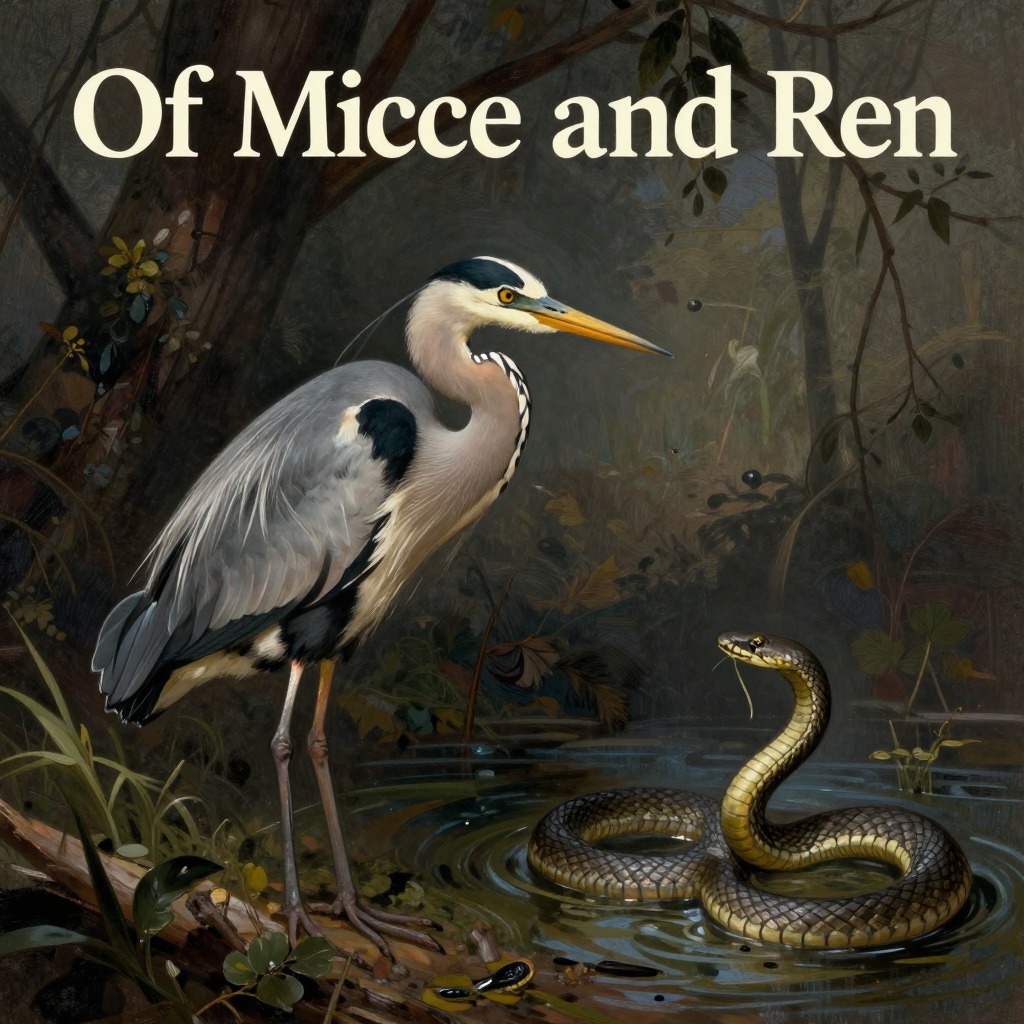
The heron is a silent, motionless predator that appears at the Salinas River pool in the opening of John Steinbeck's Of Mice and Men, embodying the natural world's indifferent cycle of predation and foreshadowing the novel's violent climax. Its presence in the first chapter establishes a tone of quiet, lethal patience that permeates the landscape and anticipates the human tragedy to come.
Appearance and Behavior
The heron stands in the shallows of the deep green pool, motionless and waiting. It is first seen when a water snake glides smoothly up the pool, twisting its periscope head from side to side, and swims the length of the pool to come to the heron's legs. In a swift, silent action, the heron's head and beak lance down and pluck the snake out by the head, and the beak swallows the little snake while its tail waves frantically. After the wind dies and the clearing becomes quiet again, the heron remains in the shallows, motionless and waiting, and another little water snake swims up the pool, turning its periscope head from side to side, suggesting the cycle of predation will repeat.
Interaction with Lennie
When Lennie appears out of the brush, coming as silently as a creeping bear moves, the heron reacts instantly. It pounds the air with its wings, jacks itself clear of the water, and flies off down river. The heron's departure coincides with the little snake sliding in among the reeds at the pool's side, breaking the natural order of predator and prey. The heron's flight marks the intrusion of human presence into the natural world and signals a disruption that will culminate in the novel's final scene.
Narrative Significance
The heron functions as a natural emblem of the novel's themes of predation, inevitability, and the harshness of existence. Its silent, efficient killing of the water snake mirrors the later killing of Lennie by George, which is also swift, necessary, and carried out by a figure who has been waiting and watching. The heron's motionless patience and its sudden, decisive action prefigure George's own stillness and the single shot that ends Lennie's life. The heron's departure when Lennie arrives also suggests that the natural world recoils from human violence, or that human violence is a different, more chaotic force than the clean predation of nature. The heron never reappears, but its image lingers as a touchstone for the novel's moral landscape.